

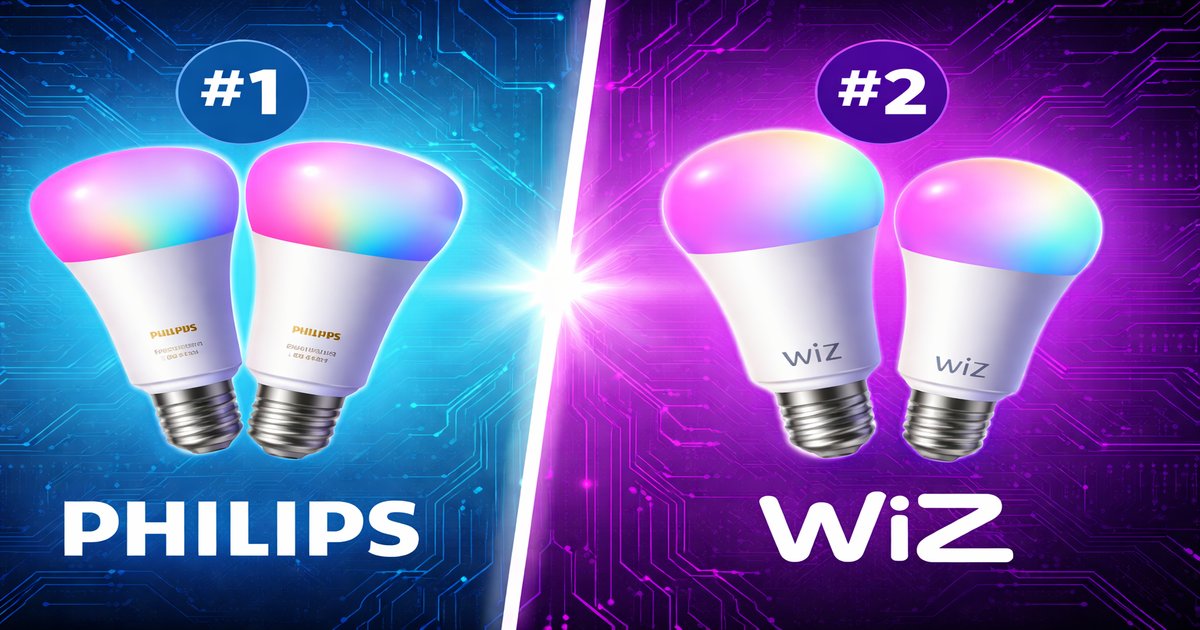

You’ve finally decided to smarten up your home with some fancy lights, but the choices are overwhelming. Philips Hue and Wiz Lights both promise to transform your living space, but which one is really worth your hard-earned cash? Let’s break it down so you can make the right choice for your needs.
| Feature | Philips Hue | Wiz Lights |
|---|---|---|
| Hub Required | ✓ | ✗ |
| App Compatibility | iOS, Android | iOS, Android |
| Voice Control | ✓ | ✓ |
| Color Range | 16 million | 16 million |
| Price Range | $$$ | $$ |
| Integration with Smart Home Systems | Extensive | Moderate |
✅ philips Pros
- Extensive smart home integration
- Reliable performance with a hub
- High-quality build and design
❌ philips Cons
- Higher price point
- Requires a hub for full functionality
- Complex setup for beginners
✅ wiz lights Pros
- More affordable price
- No hub required
- Easy setup and user-friendly app
❌ wiz lights Cons
- Limited smart home integration
- Occasional connectivity issues
- Less premium build quality
Performance and Reliability
Philips Hue lights are renowned for their reliability. Once you’ve set them up with the hub, they rarely drop connection and respond quickly to app commands and voice controls. This makes them ideal for a smart home enthusiast who doesn’t want to deal with tech headaches. On the other hand, Wiz Lights skip the hub requirement, which simplifies setup but sometimes leads to connectivity hiccups. If you just need a few lights to wow your guests, the occasional dropout might not be a dealbreaker.
Build Quality and Design
Philips Hue lights boast a premium design that fits seamlessly into any modern home decor. The build quality is top-notch, and they just feel more robust. Wiz Lights have a slightly cheaper feel, which matches their price point. If aesthetics and durability matter to you, Philips wins here. However, if you’re looking for something that gets the job done without breaking the bank, Wiz might be more than sufficient.
Value for Money
Philips Hue lights are an investment. You’ll pay more upfront, but you get a polished product with extensive smart home compatibility. They’re perfect if you’re planning on expanding your smart home ecosystem over time. Wiz Lights offer a budget-friendly entry into smart lighting. They’re great for renters or anyone looking to dip their toes into smart lighting without committing to a hub or a hefty price tag.
Philips Hue requires a hub, which can be a hidden cost if you’re expanding your setup. Also, while Wiz Lights don’t need a hub, their Wi-Fi dependency can be a pain if your internet is spotty. Many reviews gloss over these aspects, but they can affect your experience significantly.
Our Final Verdict: Which One Should You Buy?
If you’re serious about creating a seamless smart home experience and don’t mind spending extra, Philips Hue is your go-to. It’s perfect for tech-savvy homeowners who want reliability and extensive integration. For those just starting or on a budget, Wiz Lights offer excellent value without the need for additional equipment. They’re ideal for renters or anyone wanting easy-to-use, smart lighting on a budget.
Do I need a hub for both Philips and Wiz Lights?
Philips Hue requires a hub for full functionality, while Wiz Lights do not, relying solely on Wi-Fi.
Are these lights compatible with voice assistants?
Yes, both Philips Hue and Wiz Lights work with popular voice assistants like Alexa and Google Assistant.
How do these lights fare in terms of longevity?
Both brands offer LED lights with a long lifespan, typically around 15,000 to 25,000 hours, depending on usage.