
Imagine you’re ready to transform your living space into a vibrant, smart home haven. The lights you choose will determine just how seamless and spectacular that transformation will be. If you’re torn between LIFX and Philips Hue, you’re not alone. Let’s dive into what sets these two heavyweights apart.
| Feature | LIFX | Philips Hue |
|---|---|---|
| Brightness (Lumens) | 1100 | 800 |
| Hub Required | ✗ | ✓ |
| Color Range | 16 million | 16 million |
| Integration with Smart Home Systems | ✓ | ✓ |
| Energy Consumption | 11W | 9.5W |
| App Usability | Intuitive | Comprehensive |
✅ lifx Pros
- Brighter bulbs with 1100 Lumens.
- No hub required for operation.
- Easy setup and installation.
❌ lifx Cons
- Higher energy consumption at 11W.
- Limited ecosystem compared to Hue.
✅ philips hue Pros
- Extensive ecosystem with a variety of accessories.
- Lower energy consumption at 9.5W.
- Comprehensive app with advanced features.
❌ philips hue Cons
- Requires a hub for full functionality.
- Lower brightness at 800 Lumens.
Performance
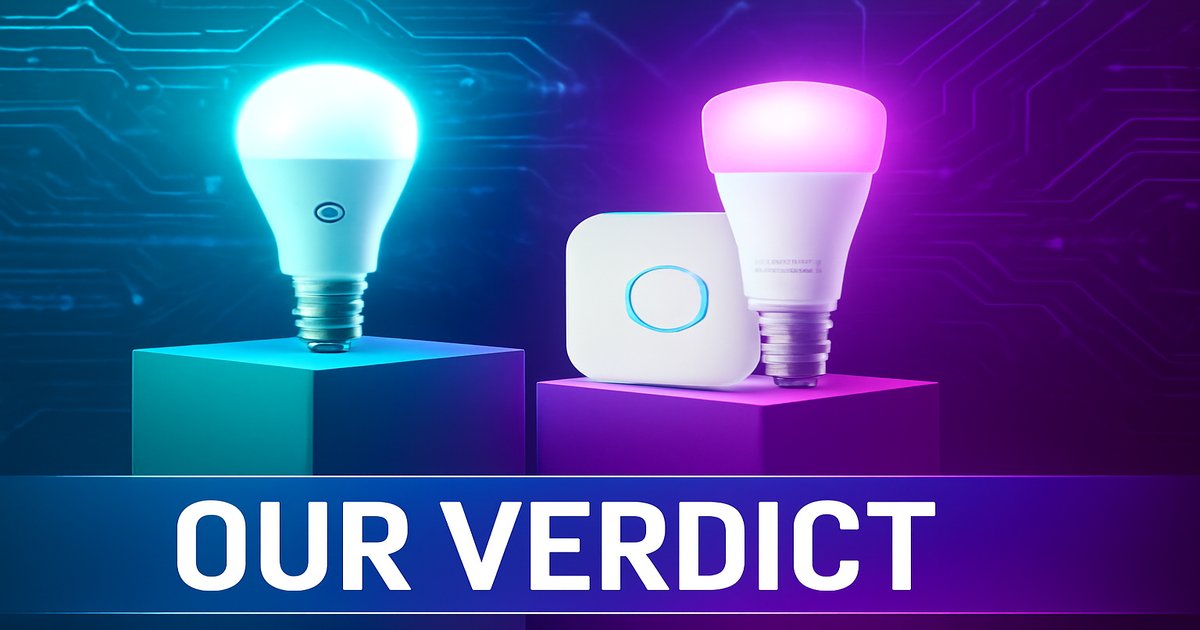
When it comes to performance, brightness is a significant factor. LIFX wins here with its 1100 Lumens output, making it ideal for larger rooms or spaces where bright lighting is crucial. On the other hand, Philips Hue, with its 800 Lumens, might seem dimmer, but it compensates with an energy-efficient design. If you’re looking for vibrant lighting that can flood a space, LIFX is your go-to. However, for those who prioritize energy savings without compromising too much on light quality, Philips Hue holds its ground.
Build Quality and Ecosystem
Philips Hue boasts a robust ecosystem that includes bulbs, light strips, and beyond, all seamlessly controllable through a single hub. This makes it perfect for those who want a unified, integrated smart home system. LIFX, while lacking the extensive ecosystem, offers a more straightforward setup with no hub required. If you’re just starting and want simplicity, LIFX provides a hassle-free experience. For smart home enthusiasts who want everything interconnected, Philips Hue’s ecosystem is unmatched.
Value for Money
LIFX might initially seem like a better deal since it doesn’t require a hub, saving you some upfront costs. However, Philips Hue’s extensive ecosystem and lower energy consumption might save you money in the long run, especially if you expand your smart home setup over time. If you’re looking for a quick setup with bright, standalone bulbs, LIFX delivers value. But if you’re investing in a comprehensive smart lighting system, Philips Hue offers better long-term value.
Watch out for the hidden costs with Philips Hue’s ecosystem; the hub and additional accessories can add up quickly. LIFX’s app, while intuitive, can occasionally lag or disconnect, something to be aware of if seamless control is your priority.
Our Final Verdict: Which One Should You Buy?
If you’re a smart home newbie or someone who wants brilliant, bright lights without the fuss of additional hardware, LIFX is your match. It’s perfect for those who value simplicity and powerful illumination. For the smart home aficionado who craves a fully integrated system with room to grow, Philips Hue is the way to go. Its ecosystem is unbeatable for those looking to expand their smart home capabilities.
Are LIFX bulbs compatible with all smart home systems?
Yes, LIFX bulbs are compatible with major systems like Alexa, Google Assistant, and Apple HomeKit.
Do Philips Hue lights need a hub to work?
Yes, for full functionality and access to the entire ecosystem, a Philips Hue Bridge is required.
Which lights last longer?
Both LIFX and Philips Hue bulbs offer a similar lifespan of around 25,000 hours, so longevity shouldn’t be a deciding factor.