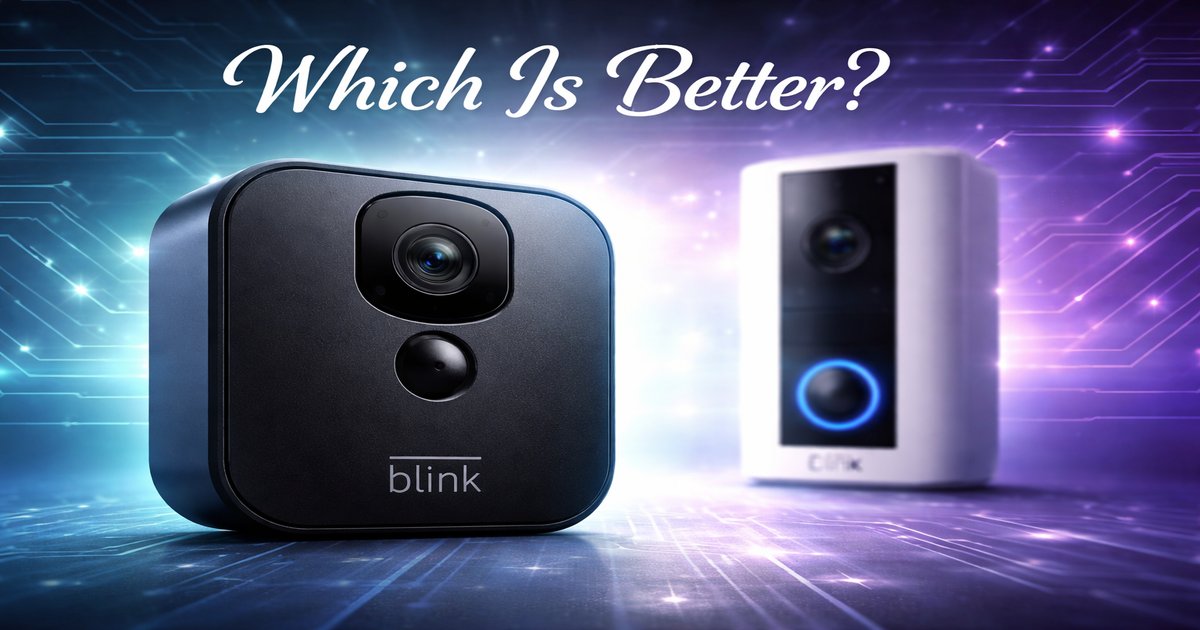



You’re in the market for a security camera, but the options are endless. Do you prioritize cutting-edge features or a straightforward setup? Let’s cut through the noise and see if Ring or Blink fits your needs.
| Feature | Ring | Blink |
|---|---|---|
| Video Quality | 1080p HD | 1080p HD |
| Field of View | 155° | 110° |
| Two-Way Audio | ✓ | ✓ |
| Battery Life | 6-12 months | Up to 2 years |
| Subscription Required for Full Features | ✓ | ✗ |
| Smart Home Compatibility | Amazon Alexa | Amazon Alexa |
✅ ring Pros
- Wide field of view captures more area.
- Robust smart home integration.
- Reliable motion detection with sensitivity settings.
❌ ring Cons
- Subscription needed for video storage and features.
- Shorter battery life compared to Blink.
✅ blink Pros
- Impressive battery life up to two years.
- No subscription fee for basic features and storage.
- Easy to install and set up.
❌ blink Cons
- Narrower field of view than Ring.
- Fewer advanced features without subscription.
Performance and Video Quality
Both Ring and Blink offer 1080p HD video, which is solid for clear visuals. However, Ring’s edge lies in its 155° field of view, allowing you to capture more of your surroundings. This is particularly useful if you have a wide front porch or backyard. Blink’s 110° field is adequate for smaller areas but might miss some action on the periphery. If you need comprehensive coverage, Ring is the way to go. But if you’re just looking to cover a specific entry point, Blink does the job just fine.
Battery Life and Power
Blink’s battery life is a game-changer. With up to two years on two AA lithium batteries, it’s practically set-and-forget. Ring, on the other hand, offers 6-12 months, which is still decent but requires more frequent attention. If you’re not a fan of constantly checking battery levels, Blink gives you peace of mind. Ring’s shorter battery life can be a hassle, especially if you forget to recharge or replace it, risking gaps in coverage.
Value and Cost of Ownership
Blink clearly wins on cost-effectiveness. Without the need for a subscription to access basic features like video storage, it keeps ongoing costs minimal. Ring, while offering a more feature-rich experience, requires a subscription to unlock its full potential, adding to the long-term expense. If you’re budget-conscious and prefer minimal recurring costs, Blink is the economical choice. But if advanced features and integrations are your priority, Ring’s subscription might be worth it.
With Ring, beware of the subscription model. It feels like a necessary evil to truly benefit from all its features. Blink, while initially cheaper, might limit you if you later crave advanced functionalities. Both are solid, but their ecosystems can lock you in.
Our Final Verdict: Which One Should You Buy?
If you need a straightforward, cost-effective solution with no strings attached, Blink is your best bet. It’s ideal for someone who wants hassle-free, long-term security without hidden costs. However, if you’re a tech enthusiast who craves a comprehensive feature set and doesn’t mind the subscription, Ring offers superior integration and coverage.
Is Blink compatible with other smart home devices?
Blink works well with Amazon Alexa, allowing voice control, but doesn’t integrate as extensively as Ring with other smart home ecosystems.
How durable are these cameras outdoors?
Both Ring and Blink are designed for outdoor use and are weather-resistant. However, extreme conditions can affect battery performance.
Do I need professional installation?
No, both Ring and Blink are DIY-friendly. They come with straightforward instructions and don’t require specialized tools or expertise.