

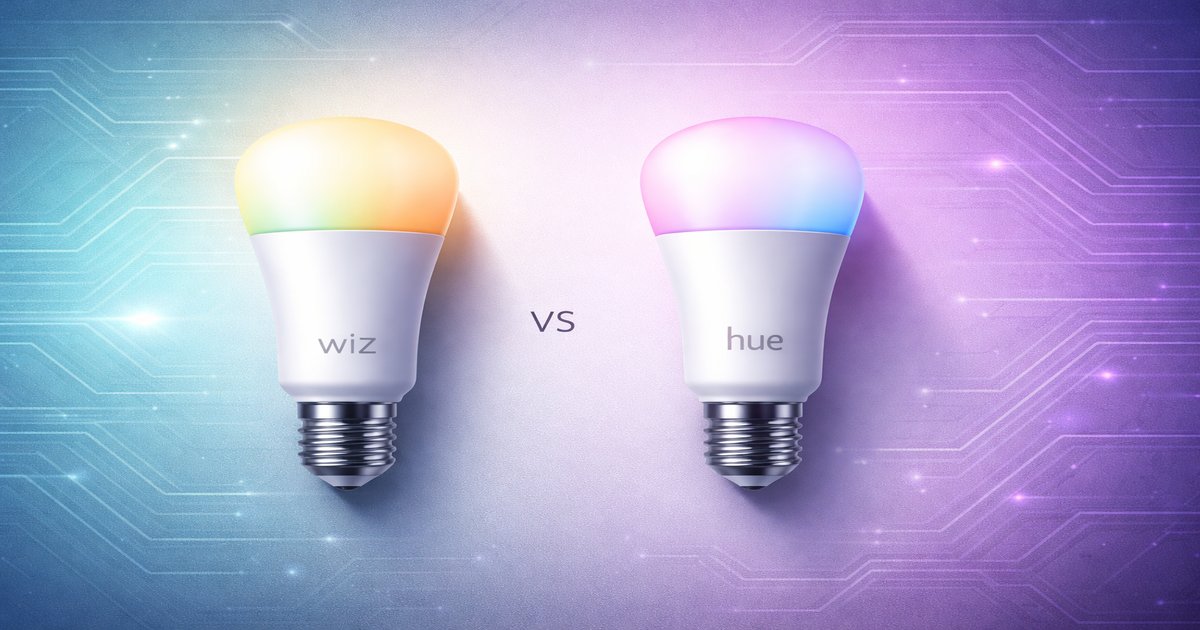

Imagine setting the perfect ambiance in your home with just a tap on your phone. Smart lighting systems like Wiz and Hue are turning this dream into reality. But which one truly lights up your life without dimming your wallet? Let’s see how these two stack up side by side.
| Specification | Wiz | Hue |
|---|---|---|
| Control Method | Wi-Fi | Zigbee + Bluetooth |
| Hub Required | ✗ | ✓ (for Zigbee) |
| App Compatibility | iOS, Android | iOS, Android |
| Voice Control | Alexa, Google Assistant, Siri Shortcuts | Alexa, Google Assistant, Apple HomeKit |
| Color Range | 16 million | 16 million |
| Energy Efficiency | A+ | A+ |
| Price Range | $15 – $30 per bulb | $30 – $50 per bulb |
✅ wiz Pros
- No hub required – easy to set up.
- Affordable price point.
- Extensive app features and customization.
❌ wiz Cons
- Relies on Wi-Fi, which can be unstable.
- Limited integration with smart home ecosystems.
✅ hue Pros
- Seamless integration with multiple smart home systems.
- Reliable Zigbee connection with optional Bluetooth.
- Extensive range of lighting products and accessories.
❌ hue Cons
- Higher cost per bulb.
- Requires a hub for full functionality.
Performance: Connectivity and Control
Wiz offers a straightforward setup with its app-based control over Wi-Fi. This means you just need a decent Wi-Fi connection, and you’re good to go. However, if your Wi-Fi is patchy, expect some hiccups. Hue, on the other hand, shines with its robust Zigbee connection, which is rock-solid and doesn’t rely on Wi-Fi. Plus, with Bluetooth as a backup, you’re covered even without a hub for basic functions. If you prioritize stability and don’t mind the initial setup, Hue’s system is hard to beat.
Build Quality and Ecosystem
Hue’s lighting products are built like tanks. The bulbs feel premium, and their ecosystem is vast, offering everything from light strips to outdoor lighting. You can tell you’re investing in quality that lasts. Wiz isn’t far behind, but their focus seems more on being budget-friendly. Their bulbs do the job, but don’t expect them to survive a drop test as well as Hue’s. If you’re looking to build a comprehensive smart lighting setup, Hue’s ecosystem offers unmatched options.
Value for Money
Wiz is the clear winner if you’re watching your budget. At half the price of Hue, the functionality you get is impressive, especially if you don’t need deep smart home integration. Hue, while pricier, delivers long-term value with its durability and extensive features. If you’re just getting into smart lighting, Wiz is a great entry point. However, if you’re looking to expand your smart home significantly, the extra investment in Hue pays off in the long run.
Most reviews gloss over the fact that Wiz bulbs can lag during app updates, which might leave you in the dark for a couple of minutes. Hue’s big secret is needing a hub for certain advanced features, a hidden cost that can surprise new users. Consider these before you jump in.
Our Final Verdict: Which One Should You Buy?
If you’re a budget-conscious newbie who wants a straightforward, no-fuss setup, go for Wiz. It’s affordable and doesn’t require any extra hardware to get started. But if you’re a smart home enthusiast looking for seamless integration and superior reliability, splurge on Hue. Its ecosystem and build quality are worth the investment for those serious about smart lighting.
Do Wiz and Hue bulbs fit standard sockets?
Yes, both Wiz and Hue bulbs are designed to fit standard E26/E27 sockets, making them compatible with most lamps and fixtures.
Can I use these bulbs outdoors?
While some Hue products are specifically designed for outdoor use, Wiz bulbs are generally intended for indoor environments unless specified otherwise.
How long do these smart bulbs last?
Both Wiz and Hue claim a lifespan of around 25,000 hours. However, real-world usage may vary depending on environmental factors and usage patterns.