

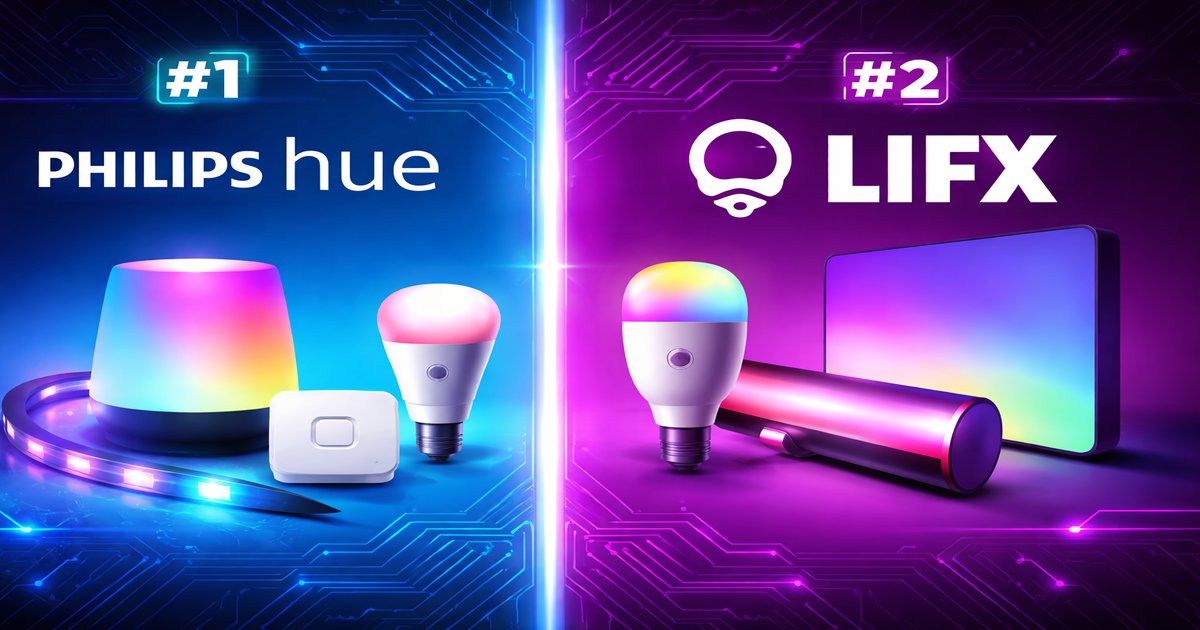

You’re finally ready to upgrade your home lighting but stuck in the battle between Philips Hue and LIFX. You want smart bulbs that are reliable, easy to use, and won’t make you feel like you need a degree in engineering to set up. Let’s break down where each stands and which might suit your lifestyle better.
| Feature | Philips Hue | LIFX |
|---|---|---|
| Lumens | 800-1600 | 800-1100 |
| Color Range | 16 million | 16 million |
| WiFi Hub Required | ✓ | ✗ |
| App Control | ✓ | ✓ |
| Voice Control | ✓ | ✓ |
| Integration | Apple HomeKit, Google Assistant, Alexa | Apple HomeKit, Google Assistant, Alexa |
| Price Range | $$ – $$$ | $$ – $$$ |
✅ philips hue Pros
- Extensive ecosystem with numerous compatible accessories.
- Reliable performance with excellent color accuracy.
- Strong integration with major smart home platforms.
❌ philips hue Cons
- Requires a separate hub for operation.
- Higher initial setup cost compared to some competitors.
- Limited brightness in some bulb models.
✅ lifx Pros
- No hub required, making setup straightforward and hassle-free.
- Excellent brightness across the board.
- Rich color and wide color temperature range.
❌ lifx Cons
- App can be occasionally glitchy.
- Limited ecosystem compared to Philips Hue.
- Bulbs tend to be bulkier, which might not fit all fixtures.
Performance
When it comes to performance, both Philips Hue and LIFX offer vibrant colors and reliable connectivity. However, LIFX bulbs tend to be brighter, which is perfect if you want to light up larger spaces or need that extra brightness for a specific task. Philips Hue, on the other hand, excels in color accuracy and consistency, making it an excellent choice if you’re particular about precise hues and subtle lighting moods. If you’re the type who wants to adjust the ambiance for every occasion, Hue’s reliable performance won’t disappoint.
Build Quality
Philips Hue bulbs feel robust and are designed with longevity in mind, but they do require a hub, adding a bit of clutter to your smart home setup. LIFX offers the convenience of a no-hub setup, which is fantastic for minimalists. However, the bulkier build of LIFX bulbs might not fit in every fixture, especially those with limited space. If you’re planning a sleek, streamlined home setup, consider whether the bulk of LIFX fits your style.
Value
Philips Hue’s initial cost might be higher due to the hub requirement, but it pays off if you plan to build a comprehensive smart lighting system over time. The broad ecosystem offers more flexibility and options. LIFX might seem more cost-effective since it skips the hub, and its higher brightness can mean fewer bulbs needed. However, if you expand, the lack of LIFX’s ecosystem might feel limiting. Think about your long-term smart home plans when weighing value.
One thing most reviews gloss over is the need for patience with LIFX app updates, which can occasionally bug out. Philips Hue users often overlook the additional cost of the hub, which is essential for full functionality. Also, not every fixture loves the bulk of a LIFX bulb, so double-check your lamp sizes.
Our Final Verdict: Which One Should You Buy?
If you’re a smart home enthusiast ready to deck out every corner with cohesive lighting, Philips Hue is your best bet. Its extensive ecosystem and reliable performance make it ideal for tech-savvy users who want depth and expandability. On the other hand, if you’re looking for a straightforward, plug-and-play experience with no additional hardware, LIFX shines bright. It’s perfect for minimalist setups or those who prioritize simplicity and immediate brightness.
Do I need a hub for Philips Hue?
Yes, for full functionality like remote control and integration with other smart home devices, you’ll need the Philips Hue Bridge.
Are LIFX bulbs compatible with my existing smart home system?
LIFX bulbs integrate well with major systems like Apple HomeKit, Google Assistant, and Alexa, so they should fit right into most setups.
How does the longevity of these bulbs compare?
Both Philips Hue and LIFX have similar longevity, often rated for 25,000 hours of use, but real-world longevity can vary based on usage patterns.