



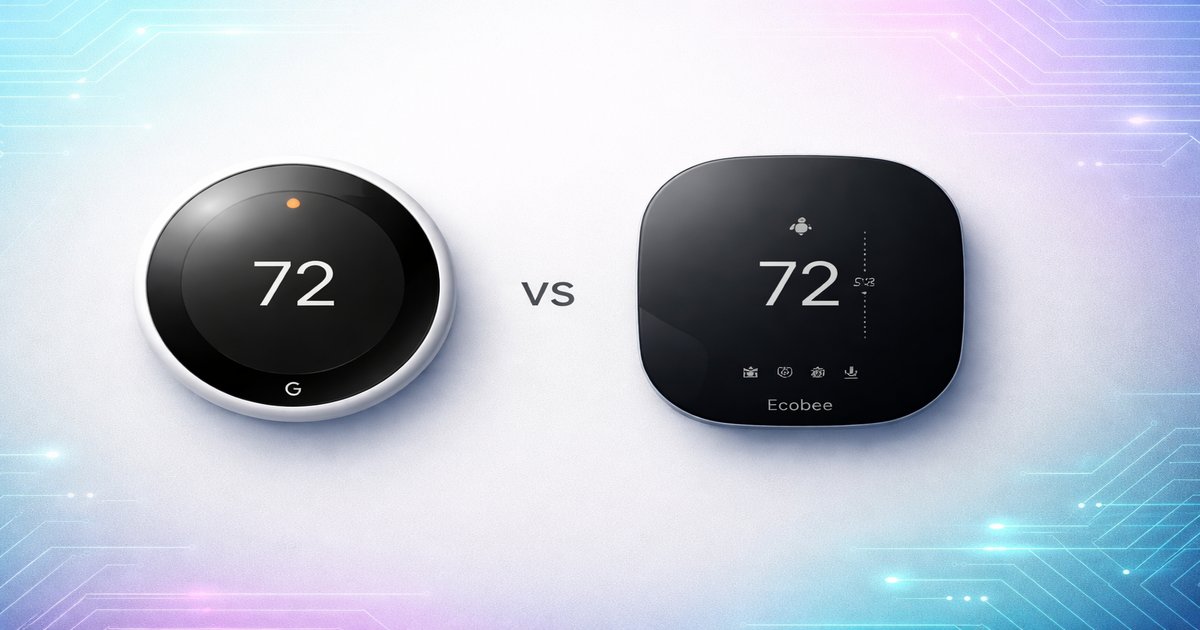

Choosing between the Google Nest and the Ecobee thermostat can feel like picking a team in a championship game. Both promise to revolutionize how you manage your home’s climate, but which one truly fits your lifestyle? Let’s break it down so you can make the right call for your home comfort needs.
| Feature | Google Nest | Ecobee Thermostat |
|---|---|---|
| Voice Control | ✓ (Google Assistant) | ✓ (Alexa and Siri) |
| Remote Sensors | ✗ | ✓ |
| Smart Home Integration | ✓ | ✓ |
| Energy Reports | ✓ | ✓ |
| Geofencing | ✓ | ✓ |
| Display | 2.4″ LCD | 3.5″ Full-color Touchscreen |
✅ google nest Pros
- Seamless integration with Google ecosystem.
- Sleek, minimalist design that fits most home decors.
- Efficient energy-saving algorithms.
❌ google nest Cons
- Lacks remote sensors for room-specific adjustments.
- Pricey compared to some other smart thermostats.
- Limited voice assistant compatibility.
✅ ecobee thermostat Pros
- Comes with remote sensors for complete home coverage.
- Works with multiple voice assistants.
- Larger, more user-friendly touchscreen display.
❌ ecobee thermostat Cons
- Setup can be more complex than Nest.
- Design is less sleek and modern.
Performance: Efficiency and Comfort
The Google Nest is known for its intuitive learning capability, adapting to your schedule to optimize energy use. It gradually learns when you’re home and automatically adjusts the temperature, which can mean savings on your energy bill. The Ecobee, on the other hand, shines in its ability to keep multiple rooms comfortable thanks to its remote sensors. If you have a larger home or specific rooms that need different temperatures, Ecobee’s sensors offer a clear advantage, ensuring every part of your home is at the right climate.
Build Quality: Design and Functional Aesthetics
Google Nest’s design is the epitome of modern minimalism. Its slick, circular shape and clear display make it a stylish addition to any wall. It’s built to blend in yet stand out in a good way. Ecobee’s larger, rectangular design with a touchscreen offers more display real estate, but it lacks the Nest’s aesthetic subtlety. If you’re picky about decor, Nest’s design might sway your decision. However, Ecobee compensates with a practical design that houses functionality over form.
Value: Cost vs. Features
Both thermostats are on the higher end of the price spectrum, but you get what you pay for. Nest’s price tag is justified by its seamless integration with the Google ecosystem and intelligent learning capabilities, making it a solid long-term investment if you’re already in the Google environment. Ecobee offers excellent value with its remote sensors included, which are perfect for those who need comprehensive home temperature management. If you’re an Alexa user, Ecobee’s compatibility can be a big plus.
While both products promise energy savings, remember that your home’s insulation and personal habits significantly impact actual savings. The Nest’s learning feature can initially overestimate your needs, so manual adjustments may be necessary. With Ecobee, the remote sensors need strategic placement to avoid temperature reading inaccuracies.
Our Final Verdict: Which One Should You Buy?
For those entrenched in the Google ecosystem, or if you value sleek design and automated learning, the Google Nest is your best bet. It’s perfect for tech-savvy users who appreciate minimalism and simplicity. On the other hand, if you need a thermostat that offers room-specific climate control and works well with multiple voice assistants, the Ecobee thermostat is your go-to. It’s ideal for households that rely on Alexa or Siri and have diverse home climate needs.
Is the Google Nest compatible with all HVAC systems?
The Google Nest is compatible with most 24V systems, including gas, electric, and forced air systems, but it’s always wise to check your system’s compatibility first.
Can the Ecobee thermostat control multiple rooms independently?
Yes, the Ecobee uses remote sensors to manage temperatures in different rooms, which is fantastic for maintaining consistent comfort throughout your home.
Do these thermostats require a C-wire for installation?
Both thermostats prefer a C-wire for installation, but Nest can work without one using a power adapter, while Ecobee includes a Power Extender Kit for installations lacking a C-wire.