
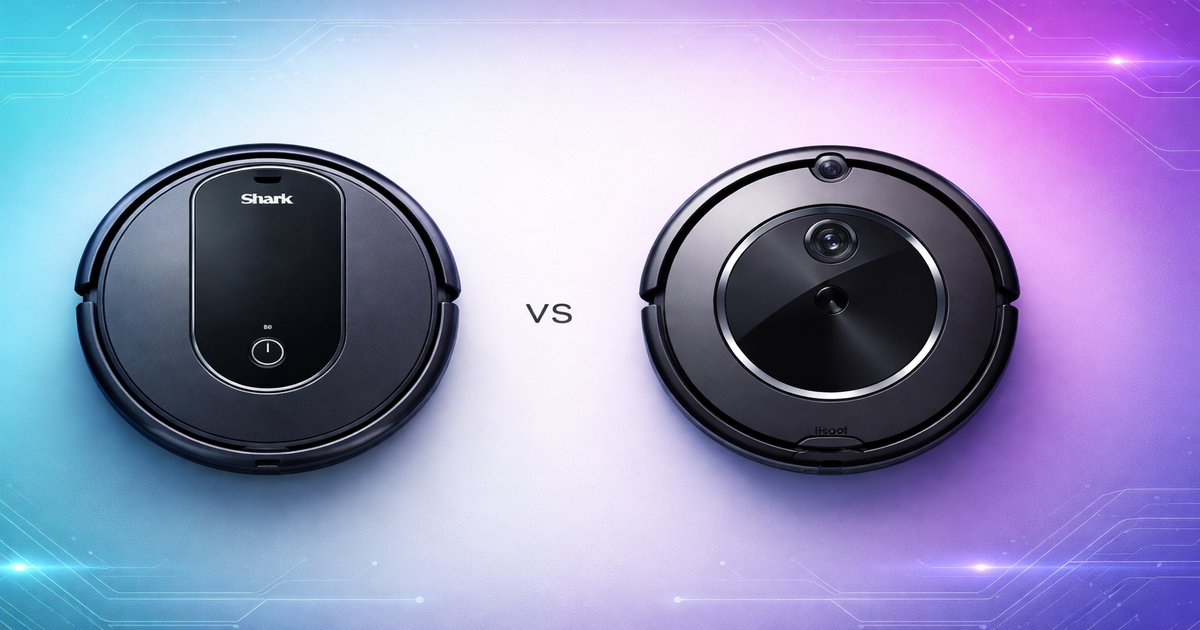

You’re tired of spending weekends wrestling with the vacuum, and you’re eyeing a robotic helper to take over the chore. But which one should you trust to handle the mess: the Shark or the Roomba? Let’s cut through the noise and get to the nitty-gritty of these two popular contenders.
| Feature | Shark | Roomba |
|---|---|---|
| Navigation Technology | Laser (LIDAR) | Camera-based (vSLAM) |
| Battery Life | 90 minutes | 75 minutes |
| Self-Emptying | ✓ | ✓ |
| Smart Mapping | ✓ | ✓ |
| Cleaning Modes | 3 | 5 |
| Pet Hair Performance | Good | Excellent |
| Price Range | $350-$450 | $500-$700 |
✅ shark Pros
- More affordable compared to Roomba.
- Longer battery life, ideal for larger spaces.
- Effective laser navigation for precise cleaning paths.
❌ shark Cons
- Struggles with deep carpet cleaning.
- Limited cleaning modes compared to Roomba.
- Occasional connectivity issues with the app.
✅ roomba Pros
- Outstanding at picking up pet hair.
- Advanced cleaning modes for different needs.
- Highly reliable vSLAM navigation for obstacle avoidance.
❌ roomba Cons
- More expensive, which might not be justifiable for all users.
- Shorter battery life can be a drawback for larger homes.
- Camera-based navigation may struggle in low-light conditions.
Performance: Cleaning Power and Precision
Shark’s laser navigation is a game-changer for precision. It methodically covers the area, rarely missing a spot. However, if you’ve got a shag carpet, the Roomba’s superior suction and brush design come into their own, especially for pet owners. The Roomba’s ability to adapt its cleaning mode based on the surface type is a feature you’ll appreciate. If you’ve got mixed flooring, the Roomba edges ahead, but for straightforward hardwood or tile, the Shark holds its ground.
Build Quality and Reliability
Roomba has been in the game longer, and it shows in their robust build quality. You feel it when you pick them up; Roomba just feels more solid. The design is slightly more polished, and there’s an attention to detail that justifies its higher price tag. Shark, while not as refined, offers a durable build that’s more than capable of daily use. It’s just that the Roomba feels like it can survive a few more tumbles down the stairs.
Value for Money
If budget is a significant factor, Shark gives you more bang for your buck. It’s not a cheap knock-off; it’s a well-rounded machine that performs admirably for its price. The Roomba, though pricier, delivers extra capabilities that justify its cost for those who need them. It’s the classic case of “you get what you pay for,” where Roomba’s investment might save you more hassle in the long run, especially for pet-filled, carpeted homes.
Both vacuums have their quirks that you won’t find on the spec sheet. Shark’s app can be finicky, dropping connections or refusing to start the vacuum. Roomba’s camera navigation isn’t foolproof; dim lighting can confuse it, causing it to miss areas. These aren’t deal-breakers, but they’re the kind of real-world issues you should be prepared for.
Our Final Verdict: Which One Should You Buy?
If you’re on a budget and have a straightforward layout with mostly hard floors, the Shark is your go-to. It’s reliable, offers excellent navigation, and won’t break the bank. On the other hand, if you have a bit more money to spend, own pets, or have a more complex floor plan with carpets, invest in the Roomba. Its superior cleaning modes and reliability in varied environments make it worth the premium.
Can these vacuums handle pet hair effectively?
Roomba excels in picking up pet hair, especially on carpets, thanks to its robust brushes and suction power. Shark is competent but doesn’t perform as well on deep carpets.
How do they perform on different floor types?
Both perform well on hard floors, but Roomba adjusts its cleaning modes for carpets, making it more versatile. Shark is efficient but might miss deep cleaning on thicker carpets.
Are there subscription or additional costs for maintenance?
Both require periodic maintenance like replacing brushes and filters. Roomba parts can be slightly more expensive, but both offer long-term kits to reduce recurring costs.