


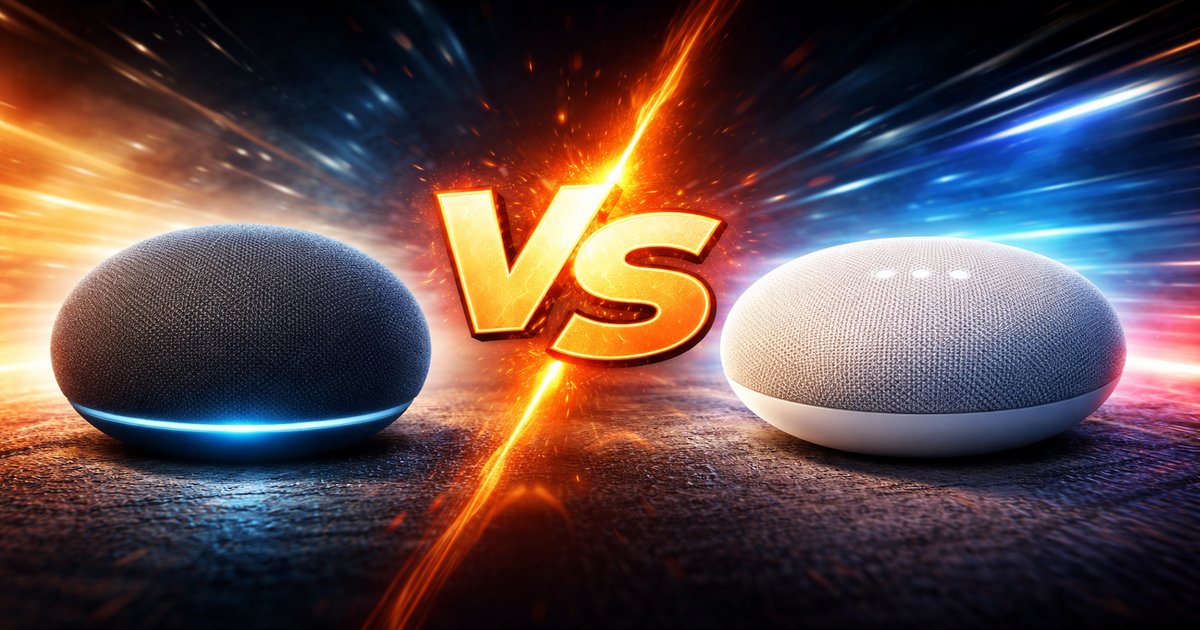

You’re setting up your smart home, juggling between voice assistants, and the decision boils down to Alexa and Google Home. Both promise to streamline your life, but how do they stack up when it comes to controlling your chaotic morning routine or keeping the family entertained?
| Feature | Amazon Alexa | Google Home |
|---|---|---|
| Voice Recognition | Far-field, multi-room | Far-field, multi-room |
| Music Services | Amazon Music, Spotify, Apple Music | YouTube Music, Spotify, Apple Music |
| Smart Home Compatibility | 75,000+ devices | 30,000+ devices |
| Language Support | 8 languages | 13 languages |
| Custom Routines | ✓ | ✓ |
| Speaker Quality | Standard | Superior |
✅ alexa Pros
- Extensive smart home compatibility.
- Wide range of skills and integrations.
- Strong support for Amazon services.
❌ alexa Cons
- Sound quality is average.
- Limited language support compared to Google.
✅ google home Pros
- Superior sound quality.
- Better language support and natural conversation ability.
- Seamless integration with Google services.
❌ google home Cons
- Fewer smart home device compatibilities.
- Limited third-party skills compared to Alexa.
Performance in Real-World Scenarios
When it comes to performance, Google Home’s natural language processing is a game-changer. It’s like speaking to a friend who understands your context and nuance. Whether you’re asking it to play your favorite song or set a reminder, it feels intuitive. Alexa, while competent, tends to fall back on more rigid command structures, which can be a bit frustrating if you’re used to a more conversational style. Think of Google Home as your chatty buddy and Alexa as your no-nonsense butler.
Build Quality and Design
Both Alexa and Google Home sport designs that blend into a modern home, but Google Home takes the edge with its sleek, minimalist aesthetics. It fits right at home in a contemporary living room or kitchen. Alexa devices, especially the Echo line, are functional and sturdy, but they lack the premium feel of Google’s offering. If you care about your tech doubling as decor, Google Home is the one to beat.
Value for Money
In terms of bang for your buck, Alexa’s compatibility with a wide range of smart home devices gives it a distinct advantage. If you’re looking to deck out your home with smart tech, Alexa is the more cost-effective choice. Google Home, on the other hand, shines if you’re heavily invested in the Google ecosystem and value superior audio quality. Both have their strengths, but your choice should align with your existing tech commitments.
Here’s what many reviews gloss over: Alexa’s ecosystem can feel a bit overwhelming due to its sheer volume of skills, many of which are hit or miss. Meanwhile, Google Home’s integration with non-Google services can sometimes feel half-baked. If you’re not a fan of Google services, the experience might be underwhelming.
Our Final Verdict: Which One Should You Buy?
If you’re all about smart home devices and want a reliable assistant that integrates seamlessly, Amazon Alexa is your go-to. It’s perfect for tech enthusiasts who love customizing and expanding their smart home setup. On the flip side, if you prioritize sound quality and use Google services daily, Google Home is your best bet. It’s great for music lovers and those who prefer a more conversational AI experience.
How well do they understand different accents?
Both Alexa and Google Home have made strides in accent recognition, but Google Home typically handles diverse accents more accurately due to its advanced natural language processing.
Are the devices compatible with Apple products?
Yes, both Alexa and Google Home support Apple Music and can be controlled via iOS devices, although deeper integration is usually smoother with their respective ecosystems.
Which one is better for a multilingual household?
Google Home is generally better for multilingual homes, supporting more languages and switching between them more seamlessly than Alexa.