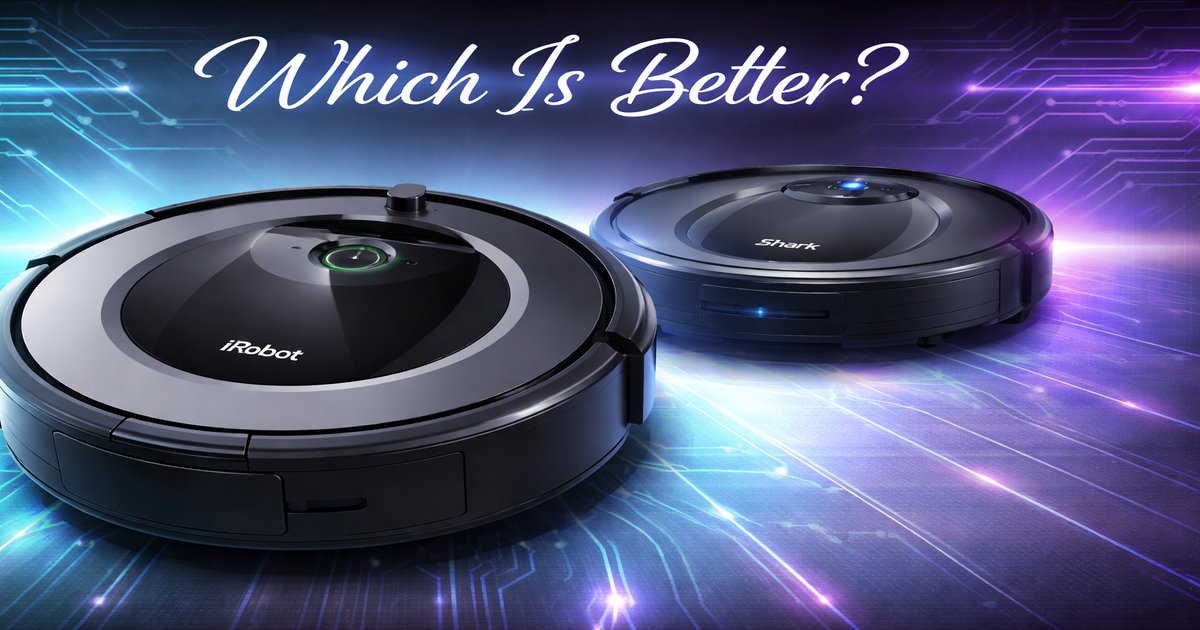

You’ve got a busy life, and the last thing you want to do is spend your precious free time vacuuming. Enter robot vacuums, which promise to take this chore off your hands. But with options like iRobot and Shark, how do you decide which one is right for your home?
| Specification | iRobot Roomba i7+ | Shark IQ Robot R101AE |
|---|---|---|
| Self-Emptying | ✓ | ✓ |
| Run Time | 75 minutes | 90 minutes |
| Smart Mapping | ✓ | ✓ |
| Voice Control | ✓ | ✓ |
| HEPA Filtration | ✓ | ✗ |
| Price | $799 | $599 |
✅ irobot Pros
- Advanced mapping technology that learns your home’s layout.
- HEPA filtration traps allergens, ideal for pet owners.
- Reliable self-emptying feature that rarely clogs.
❌ irobot Cons
- Higher price point that might not fit all budgets.
- Shorter battery life compared to Shark.
✅ shark Pros
- More affordable, offering great value for the features.
- Longer battery life means fewer interruptions during cleaning.
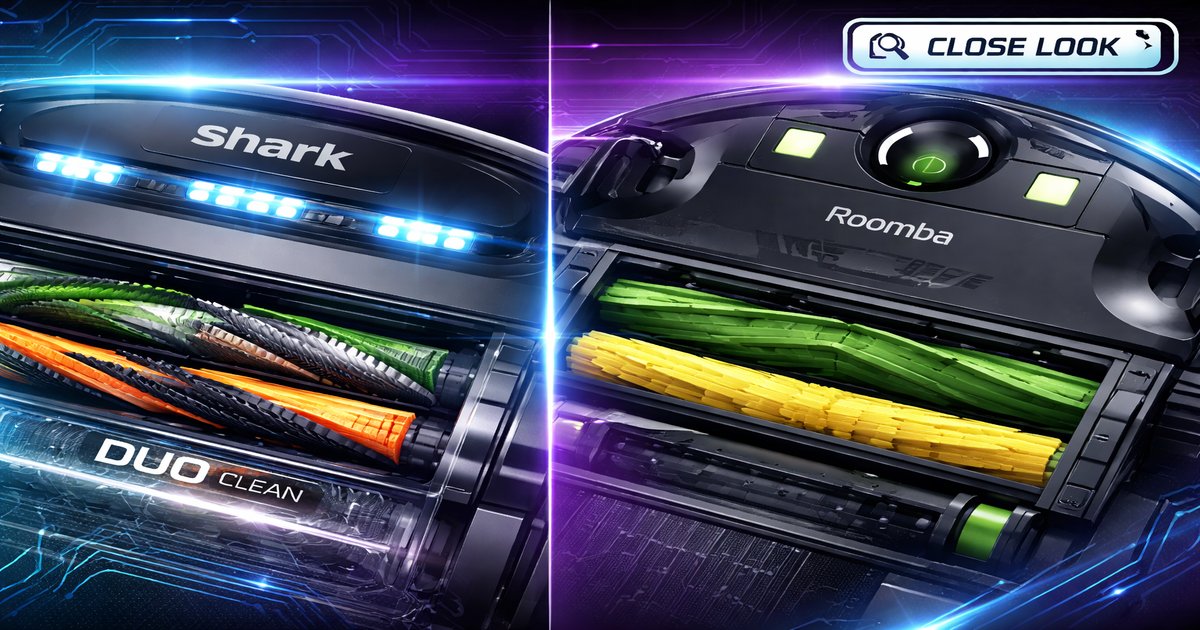
- Self-cleaning brush roll minimizes hair wrap.
❌ shark Cons
- No HEPA filter, which may not be best for allergy sufferers.
- Mapping technology can be less consistent than iRobot.
Performance
iRobot’s Roomba i7+ excels in performance due to its advanced mapping and navigation systems. It learns your home’s layout faster than the Shark and avoids bumping into furniture. The HEPA filter ensures that allergens and dust are trapped, making it better for households with pets or allergy sufferers. Shark, on the other hand, offers a longer run time. It handles larger spaces without needing a recharge, but its mapping can be hit-or-miss, sometimes leaving areas uncleaned.
Build Quality
When it comes to build quality, iRobot feels like the luxury option. Its components are sturdy and designed for longevity, and the self-emptying base rarely has issues. Shark has a good build for its price, but some users have reported issues with durability over time, particularly with the self-cleaning brush roll mechanism. If you’re looking for something that can stand the test of time, iRobot is more likely to meet your expectations, although at a higher price point.
Value
Shark offers commendable value for the money. You get most of the features found in higher-end models like iRobot but at a noticeably lower price. However, the lack of a HEPA filter might be a deal-breaker for some. iRobot, while more expensive, justifies its price with superior mapping and filtering capabilities. If you can stretch your budget, the performance and additional features of the Roomba i7+ provide better long-term value.
Don’t be fooled by the self-emptying feature; both models still require regular maintenance. The Shark’s self-cleaning brush roll can struggle with long hair, so you’ll need to check it occasionally. Also, while both promise smart mapping, neither is perfect. Expect to do some initial manual intervention to get them running optimally.
Our Final Verdict: Which One Should You Buy?
If you’re a tech enthusiast or someone with allergies willing to invest in top-tier performance, go for the iRobot Roomba i7+. It will meet your high expectations with its advanced features. If you’re budget-conscious but still want a robot vacuum that gets the job done efficiently, the Shark IQ Robot R101AE is your best bet. It’s perfect for families looking to save a buck without sacrificing too much in performance.
How does the self-emptying feature work?
Both models use a base station to automatically empty dirt and debris from the robot’s dustbin. This means you don’t have to manually empty the bin after every cleaning cycle, only every few weeks.
Are these vacuums suitable for homes with pets?
Yes, both work well for homes with pets. However, the iRobot’s HEPA filter is better for trapping pet hair and allergens.
What happens if the vacuum gets stuck?
Both models will send a notification to your smartphone if they encounter a problem and can’t continue cleaning, allowing you to address the issue promptly.